ERPNext for Manufacturing
Built for Your Industry
Manufacturing is where ERP either earns its keep or becomes shelfware. A manufacturing ERP has to hold an accurate multi-level bill of materials, plan production against real capacity, track a job from raw material to finished goods, and tell a plant manager what’s actually happening on the floor, not what a spreadsheet said last Friday. ERPNext, configured properly for manufacturing, does this without the licensing overhead of SAP or the shallow, inventory-only fit of accounting-first tools like Tally.
The manufacturing-specific problem set
Multi-level BOMs that drift from reality. A bill of materials that isn’t kept current (engineering changes, substitute materials, revised routings) quietly poisons every downstream number: costing, planning, procurement. Most manufacturing ERP failures trace back to BOM discipline, not software choice.
Most manufacturing ERP failures trace back to BOM discipline, not software choice.
No single source of shop-floor truth. Work orders, job cards, and machine or operator data often live in separate registers, WhatsApp threads, or a supervisor’s memory. By the time a number reaches the ERP, it’s already stale.
Batch and lot traceability requirements. Automotive, FMCG, and export-oriented manufacturers increasingly need to trace a finished unit back to its input batches for warranty claims, recalls, or customer audits. That standard only holds if traceability is designed into the process from the start, not bolted on afterward.
Production planning disconnected from actual capacity. Planning that ignores machine availability, changeover time, and labor constraints produces schedules the shop floor can’t hit. Miss that a few times and the team stops trusting the system altogether.
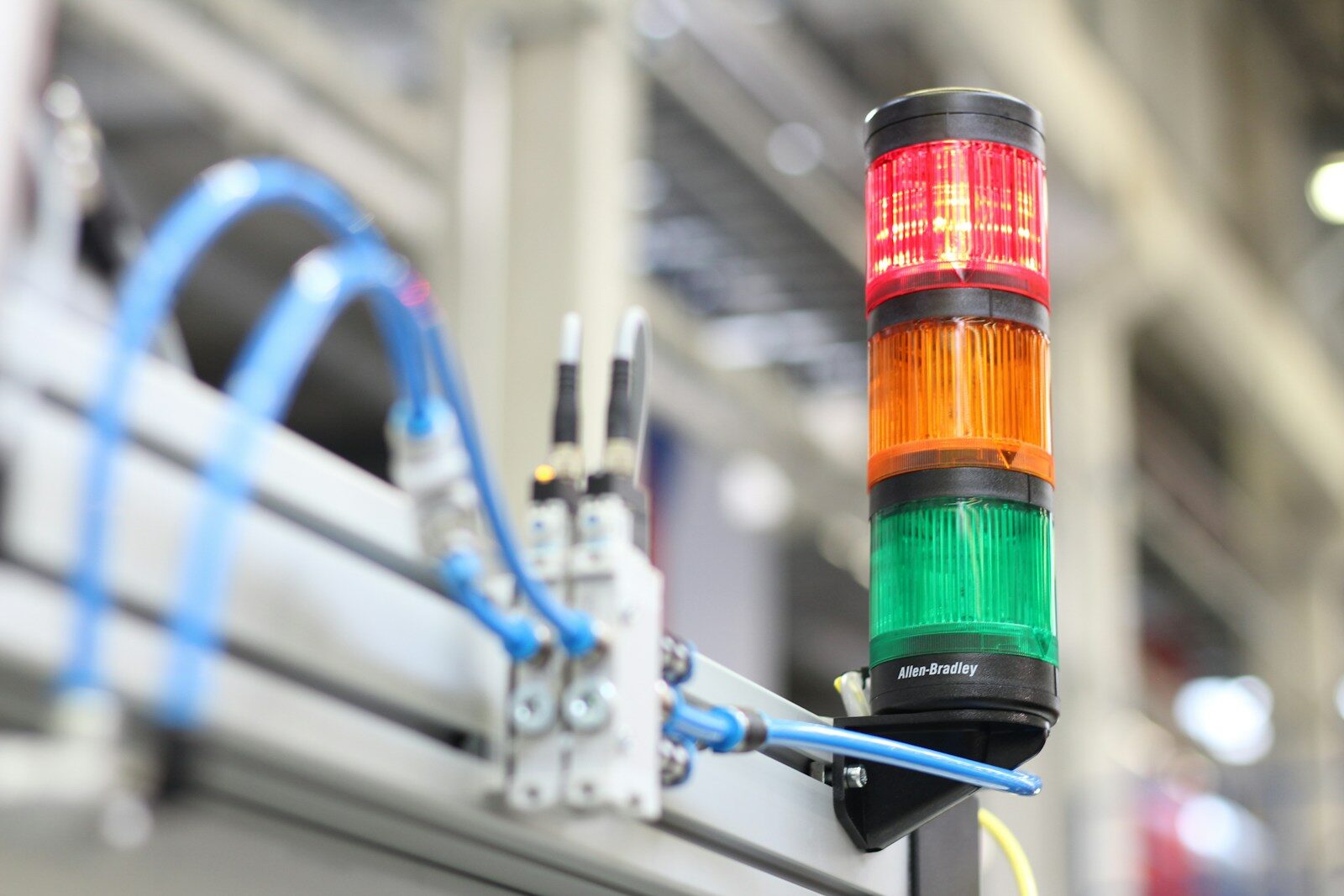
IoT/PLC data that never reaches the ERP. Machine uptime, cycle times, and quality-inspection data frequently sit in separate SCADA or PLC systems, cut off from the business system that actually needs them for costing and OEE (overall equipment effectiveness) visibility.
How we approach a manufacturing implementation
Implementing ERPNext for manufacturing starts with the BOM and routing structure before touching configuration. If the BOM is wrong, everything built on top of it (costing, MRP, planning) is wrong too, no matter how well the software itself is set up. From there:
- Process mapping on the shop floor, not just in the office: operations, routings, and quality checkpoints as they actually run, including the workarounds operators use today. Those workarounds usually point to a process gap, not a training gap.
- BOM and routing cleanup before go-live, covering engineering-change history, substitute materials, and multi-level sub-assemblies.
- Work order and job card configuration matched to how the floor actually reports progress. Barcode or QR scanning where it fits, simpler manual entry where a full scanning rollout isn’t realistic yet.
- Quality inspection and batch tracking, configured against the traceability requirements that actually apply to this business rather than a generic template. This matters most for automotive and export-facing manufacturers.
- Connected Ecosystems integration where IoT/PLC data genuinely adds value, such as machine uptime and cycle-time capture, sequenced after the core ERP is stable rather than bundled into an already complex go-live.
Mapped services & ERPNext modules
The table below maps each manufacturing pain point to the ERPNext for manufacturing module that solves it, and the KlyONIX Tech™ service that implements it. For a deeper look at core platform capabilities, see the official ERPNext product page.
| Challenge | ERPNext capability | Related KlyONIX Tech™ service |
|---|---|---|
| Multi-level BOM accuracy | BOM, Multi-level BOM, Engineering Change | ERPNext Implementation |
| Shop-floor visibility | Work Order, Job Card, Timesheet | Business Process Reengineering |
| Batch/lot traceability | Batch, Serial No., Quality Inspection | Compliance & Governance |
| Capacity-aware planning | Production Plan, Capacity Planning | ERP Advisory & Readiness |
| Machine/IoT data integration | Frappe custom app + API integration | Connected Ecosystems, System Integration |
| Production dashboards | Manufacturing reports, custom dashboards | Data, BI & Dashboards |

Manufacturing ERP readiness checklist
Before scoping ERPNext for manufacturing, run through this readiness checklist.
- BOMs are documented and current for at least your top 80% of products by volume.
- Someone in the business owns BOM/routing accuracy as an ongoing responsibility, not a one-time cleanup.
- You can name your top 3 shop-floor reporting gaps today.
- Quality/traceability requirements (customer-mandated or regulatory) are documented, not assumed.
- You know which machines or lines would benefit most from IoT/PLC data capture, and which wouldn’t justify the cost yet.
Frequently asked questions
Does ERPNext handle multi-level BOMs and sub-assemblies?
Yes. ERPNext supports multi-level BOMs, including nested sub-assemblies, substitute items, and BOM costing that rolls up through each level.
Can ERPNext track batch and serial numbers for traceability?
It can, through the Batch and Serial No. features, which tie to quality inspections and link from raw material through to finished goods.
Do we need IoT/PLC integration on day one?
Not usually, and we tend to recommend against it. Get the core manufacturing workflow (BOM, work orders, planning) stable first, then add machine-data integration once the team trusts the base system.
How is ERPNext different from Tally for a manufacturing business?
Tally is strong for accounting and GST compliance but has no real manufacturing module: no BOM, work orders, or production planning, which is exactly the gap ERPNext for manufacturing closes. ERPNext covers both accounting and manufacturing operations in one system. This is one of the clearest reasons manufacturers choose ERPNext for manufacturing over accounting-only tools.
What’s the biggest reason manufacturing ERP rollouts stall?
Inconsistent or undocumented BOMs and routings, discovered mid-implementation rather than before it starts. That’s why BOM and routing cleanup comes before configuration in our approach, not after.
See it in practice
Reading how another manufacturer worked through these same decisions is usually more useful than another feature list.
- Manufacturing ERP transformation: a mid-market discrete manufacturer moving off disconnected spreadsheets and siloed plant systems onto one ERPNext platform spanning sales, planning, procurement, production, quality and finance. Written as a representative engagement built from real project patterns rather than a single named client.
- Pharma manufacturing and distribution: a regulated manufacturer reaching 99% inventory accuracy across a 200+ product distribution network, with FEFO batch selection and rule-based pricing.
Next step
Talk to us about your production setup before committing to a scope. A short conversation usually surfaces whether the real blocker is software, process, or data. That is the starting point for any serious conversation about ERPNext for manufacturing. Not sure you’re ready to start? Run through our ERP implementation readiness framework first.