ERPNext Implementation in Nagpur
ERPNext Implementation in Nagpur
A single consignment leaves on a truck, rides a train, and finishes on a plane. You bill the customer one door-to-door rate, but you pay three carriers, and the margin lives in the gap between them.
MIHAN, the Multi-modal International Cargo Hub and Airport at Nagpur, is developed by the Maharashtra Airport Development Company (MADC), a Government of Maharashtra undertaking, integrating air, rail and road at India’s geographic centre. Source checked July 2026.
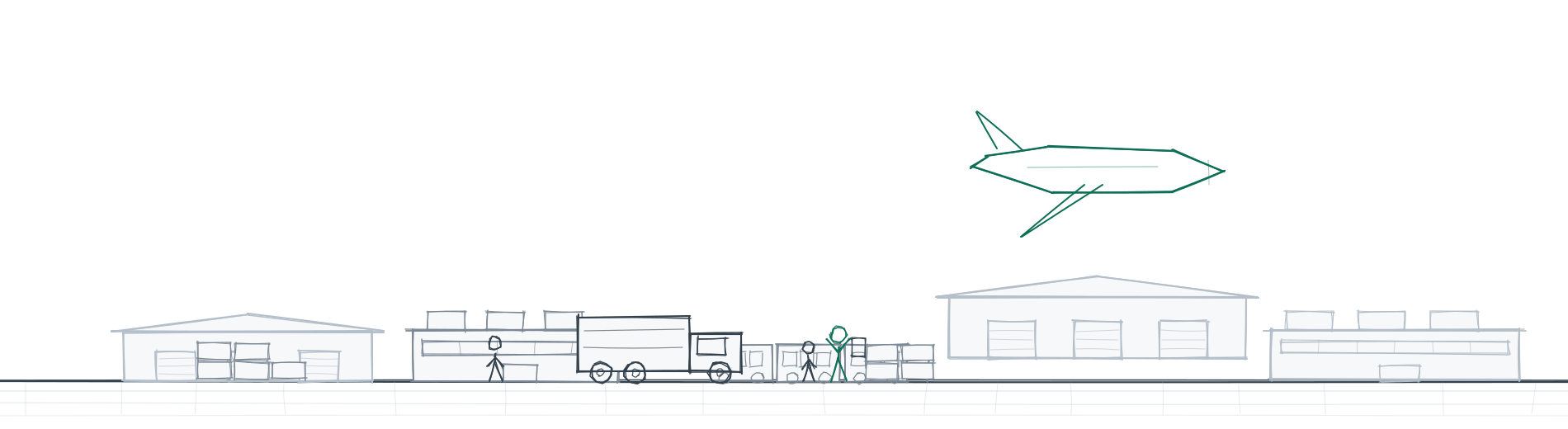
Nagpur sits at the exact centre of India, the old Zero Mile point, and MIHAN, the Multi-modal International Cargo Hub developed by MADC, turns that geography into a business: air, rail and road meeting at one place. A freight forwarder or third-party logistics operator here does not move a consignment on one vehicle; it moves it across legs and modes, and hands it over at the hub. An ERPNext implementation in Nagpur is judged on whether it can cost a consignment across all of those legs, capture the hand-offs between modes, and tell you the margin on the whole door-to-door move rather than on one truck.
What an ERPNext implementation in Nagpur has to solve
Start with the consignment, because it is the job and it spans several legs. A door-to-door move is a road pickup, a rail trunk haul, an air leg and a last mile, each with its own carrier and its own cost, and the only question that matters is whether that consignment made money once every leg is paid. If the legs scatter across a monthly ledger, margin per consignment is invisible. The system has to hold the whole move as one job that gathers every leg’s cost.
The second is the hand-off, because at a multimodal hub the transfer between modes is where cost and risk both live. Cargo comes off a truck and onto a train, off the train and onto a plane, and each transload is a cost, a moment of responsibility and a chance for delay or damage. Capturing each hand-off with its proof, its cost and who held the cargo turns a dispute at the hub into a record rather than an argument.
The third is the split between billing and paying. You quote the customer one door-to-door rate, but you settle with a transporter, a railway and an airline separately, and the margin is what is left. Billing the customer against the consignment while paying each leg carrier against the same job is the whole discipline, and it is also how you finally see margin by lane and by customer rather than a monthly total that hides the loss-making routes.
One consignment, every leg
A door-to-door move held as a single job that gathers the cost of each leg, road, rail and air, so margin is known per consignment rather than per vehicle.
The hand-off, captured
Each transload between modes recorded with its proof, cost and responsibility, so a delay or damage at the hub is a traceable record rather than an argument nobody can settle.
Bill door-to-door, pay leg by leg
The customer billed one rate while the transporter, railway and airline are each paid against the same consignment, so the margin left over is real and visible.
Know where the box is
Status and location of a consignment tracked across road, rail and air, so you can answer where it is without ringing three carriers to find out.
How we deliver in Nagpur
We start with the consignment as the cost object and the legs beneath it, because a freight business is organised around the shipment and its journey, not a warehouse of stock. The door-to-door job, each leg with its mode and carrier, and the transload at the hub captured with cost and responsibility. This looks like configuration and it is the project: cost a move leg by leg in isolation and you never see which lanes actually pay.
Then the billing and the visibility: the customer billed door-to-door while each leg carrier is paid against the same consignment, and status tracked across modes so the cargo is findable. Reporting on margin by lane and by customer, and on hub performance, comes once the consignment and its legs beneath it are captured honestly.
Typical delivery phases for a Nagpur implementation
| Phase | What happens | Why it comes here |
|---|---|---|
| 1. Discovery | Map how a consignment moves across legs and modes, how transloads happen at the hub, how each leg is costed and each carrier paid, and how status is tracked today. | Every forwarder structures a door-to-door move differently. Assuming a single-leg flow would hide the real cost and margin of the whole journey. |
| 2. Consignment and legs | The door-to-door move as the cost object, each leg with its mode and carrier, and the transload at the hub captured with cost and responsibility. | The whole costing rests on the consignment and its legs, so they are built and agreed before billing is switched on. |
| 3. Billing and margin | The customer billed door-to-door while each leg carrier is paid against the same job, giving margin per consignment, per lane and per customer. | Needs a trustworthy consignment and leg structure underneath before billing and margin mean anything. |
| 4. Tracking and reporting | Status across road, rail and air, on-time performance, and margin reporting by lane and customer drawn from the job. | Reporting is only worth trusting once the consignment and its legs beneath it are captured honestly. |
We prove the leg costing and the transload capture on live consignments before trusting them, because a forwarder finds out a lane was loss-making only when the carrier invoices land. In a trade where three carriers bill one move, the capture is proven before the margin is reported.
Are you ready? A short readiness check
- Is a consignment costed door-to-door across all its legs, or leg by leg in isolation?
- Are transloads between modes captured with proof, cost and responsibility?
- Do you bill the customer one door-to-door rate while paying each leg carrier against the same job?
- Can you see where a consignment is across road, rail and air without calling the carriers?
- Can you see margin per consignment and per lane, not just a monthly total?
Four or five clear answers means you mostly need a system that keeps a discipline your operations already run. Two or fewer means the first phase is the consignment and its legs, and at a multimodal hub that is the difference between knowing which lanes pay and finding out when the carrier invoices arrive.
Frequently asked questions
Can ERPNext cost a consignment across multiple legs and modes?
Yes. A door-to-door move is held as one job, and each leg, road, rail or air, with its own carrier and cost, is gathered against it, so you can see whether the whole consignment made money rather than costing each leg in isolation.
How does it handle the hand-off between modes?
Each transload at the hub is captured with its cost, proof and who held the cargo, so a delay or damage at the point cargo changes mode is a traceable record rather than a dispute nobody can settle.
Can it bill door-to-door while paying several carriers?
Yes. The customer is billed one door-to-door rate against the consignment, and the transporter, railway and airline are each paid against that same job, so margin per consignment is real and visible.
Can it track a consignment across road, rail and air?
Yes. Status and location are held on the consignment across all its legs, so the cargo is findable in one place rather than by ringing each carrier separately.
How long does an ERPNext implementation take for a Nagpur logistics business?
Eight to sixteen weeks for a forwarder or 3PL, because it is a service and job-costing configuration rather than a factory. The variable is how many legs, modes and carriers a typical move carries, not the software.
Key takeaways for Nagpur businesses
- At a multimodal hub the consignment is the job and it spans several legs. Cost it door-to-door or margin per shipment is invisible.
- The hand-off between modes is where cost and risk live. Capture each transload with its proof and responsibility.
- Bill door-to-door, pay leg by leg. One consignment, several carriers, and the margin is the gap between them.
- Track the box across road, rail and air, so you can answer where it is without calling three carriers.
Planning ERPNext for a Nagpur logistics or MIHAN business?
Start your ERPNext implementation with a team that will cost a consignment across every leg before it prints a margin. KlyONIX Tech™ is a Frappe Certified Partner with offices in Pollachi and Chennai, working with logistics and manufacturing businesses across Maharashtra and central India.
MIHAN, the Multi-modal International Cargo Hub and Airport at Nagpur, integrating air, rail and road across roughly 40 square kilometres of cargo hub and SEZ, is developed by the Maharashtra Airport Development Company (MADC), a Government of Maharashtra undertaking. Nagpur’s position at India’s geographic centre, the historic Zero Mile point, is what the hub is built to exploit. Source checked July 2026.
ERPNext in Mumbai · ERPNext in Pune · ERPNext in Raipur · ERPNext implementation cost