ERPNext Implementation in Rajkot
Metal goes into the furnace by weight and comes out as castings that weigh less, because the runners, risers and rejects go straight back to be melted again. What the foundry actually sold is the yield.
Foundry and investment-casting cluster figures from the SAMEEEKSHA cluster profiles, the knowledge platform run by the Bureau of Energy Efficiency with SIDBI and TERI. Rajkot is among India’s largest casting clusters. Source checked July 2026.
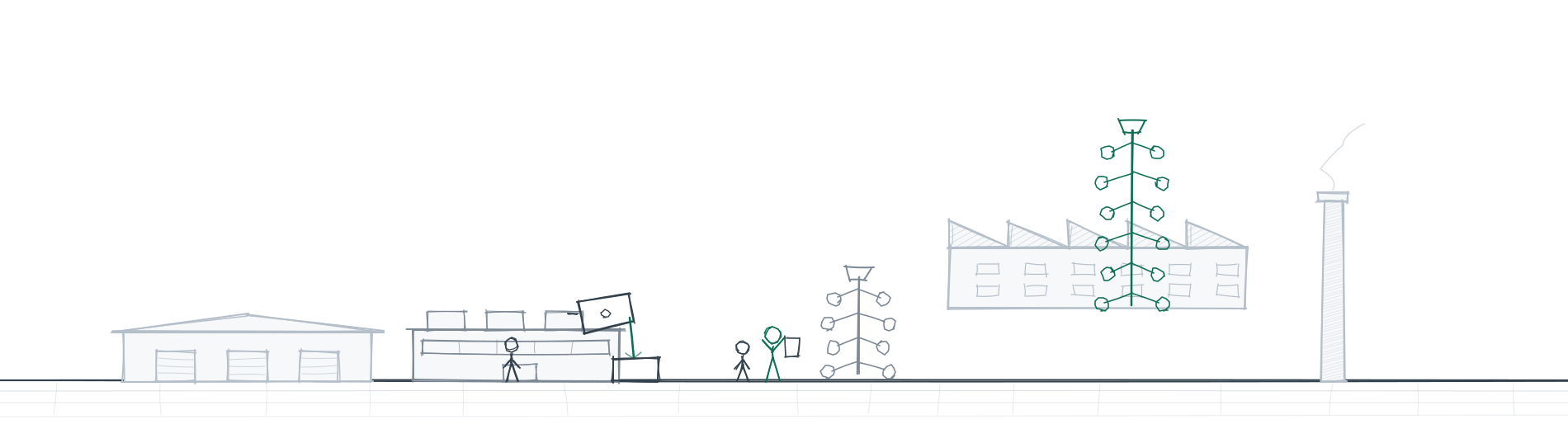
Rajkot runs on metal. Around seven hundred grey-iron foundries sit in and around the city, the investment-casting cluster pours roughly a hundred and sixty tonnes a day and employs about ten thousand people, on SAMEEEKSHA figures, making castings for pumps, valves, auto components, motors and earth movers. A foundry is not a factory that consumes material and ships product; it melts metal, pours it, and recirculates a large part of it. An ERPNext implementation in Rajkot is judged on whether it can cost a heat, measure the yield, and value the metal that goes back into the furnace instead of pretending it was sold or lost.
What an ERPNext implementation in Rajkot has to solve
Start with the heat, because that is where cost is made. A furnace is charged with a mix of scrap, pig iron and returns, melted, and poured, and the cost of that melt is metal plus energy plus labour for the heat. A standard rate per kilogram hides the two things that actually move: the charge mix and the power drawn to melt it. The system has to cost the heat as it happened, so every casting poured from it carries a melt cost that is real rather than budgeted.
The second is yield, and it is not optional. Metal poured is not metal sold. The runners, risers and gates that feed a mould, and the castings that come out rejected, go straight back to be melted again. Casting yield, the weight of good castings against the weight of metal poured, is the number that decides the margin, and it varies by pattern, by alloy and by the foundry’s day. If the system does not measure it per pattern, nobody is really costing anything.
The third is the loop, and getting it honest is the whole trick. Returns going back into the furnace have to be booked at metal value, not scrapped at full cost and not quietly ignored, or the metal balance never closes. And most castings are machined after the pour, so a finished part carries both the foundry cost and the machine-shop cost. Stop the costing at the knockout and you undercount every machined part you ship.
Cost the heat, not a standard rate
The charge mix of scrap, pig iron and returns, plus energy and labour, costed per heat, so every casting poured from it inherits a real melt cost rather than a budgeted rate per kilogram.
Casting yield, poured against good
The weight of good castings measured against the metal poured, per pattern and alloy, so yield is the number it actually was rather than an assumption that flatters a bad run.
The return loop valued honestly
Runners, risers, gates and rejected castings booked back into the melt at metal value, so the metal balance closes instead of double-counting cost or pretending the loss was a sale.
Machining as a second operation
Fettling and machining after the pour costed onto the casting, so a finished machined part carries both the foundry cost and the machine-shop cost rather than only the first.
How we deliver in Rajkot
We start with the melt and the metal loop, because a foundry is organised around the furnace, not a stores counter. Heat costing with the real charge mix, energy and labour; casting yield measured per pattern; and returns valued back into the next melt so the metal balance closes. This looks like configuration and it is the heart of the project: get the heat and the loop wrong and every cost per casting downstream is fiction with a decimal point.
Then the second operations and the reporting: machining costed onto the casting so the finished part is whole, scrap and rework made visible, and cost per good casting, yield by pattern and alloy, and the charged-poured-good-returned metal balance reported once the capture beneath them is trustworthy. Reporting comes last because a yield report built on a guessed melt is just a tidier guess.
Typical delivery phases for a Rajkot implementation
| Phase | What happens | Why it comes here |
|---|---|---|
| 1. Discovery | Map the charge mix and furnaces, the moulding and pouring flow, fettling and machining, and how returns and rejects move back to the melt. | Every foundry runs its melt and its metal loop differently. Assuming a standard flow would misstate yield, the one number that decides the margin. |
| 2. Melt and yield | Heat costing by charge, energy and labour; casting yield per pattern; and the runner, riser and reject return loop valued into the next melt. | The whole costing rests on the heat and the metal balance, so they are built and agreed before anything downstream. |
| 3. Machining and cost | Second-operation machining costed onto the casting, with scrap and rework made visible on the finished part. | Needs a trustworthy melt and yield underneath before a machined part cost means anything. |
| 4. Cost and margin | Cost per good casting, yield by pattern and alloy and furnace, and the charged-poured-good-returned metal balance. | Reporting is only worth trusting once the heat, yield and return loop beneath it are captured honestly. |
We prove the heat costing and the metal balance on live pours before trusting them, because a yield that does not reconcile with the weighbridge is worse than no yield at all. In a business where the furnace runs on power tariffs and metal prices that move weekly, the capture is proven before it is relied on.
Are you ready? A short readiness check
- Do you cost each heat with its charge mix, energy and labour, or apply a standard rate per kilogram?
- Is casting yield measured, good castings against metal poured, per pattern, or assumed?
- Are runners, risers and rejects valued back into the melt as returns, or written off?
- Does a machined casting carry both the foundry cost and the machine-shop cost?
- Can you strike a metal balance: charged, poured, good, returned, for a period?
Four or five clear answers means you mostly need a system that keeps a discipline the foundry already runs. Two or fewer means the first phase is the melt and the metal loop, and in this trade that is the difference between a cost per casting you can quote from and one you hope covers itself.
For heat-wise melt records, customer patterns and per-kilo pricing across any foundry, see ERPNext for foundry and castings.
Frequently asked questions
Can ERPNext handle foundry heat and melt costing?
Yes. A heat carries its charge mix of scrap, pig iron and returns, plus energy and labour, and the castings poured from it inherit that melt cost, so cost is built from the furnace rather than a standard rate applied afterwards.
How is casting yield tracked?
As the weight of good castings against the weight of metal poured, held per pattern and alloy, so yield is measured where it is made and a bad pattern cannot hide inside a cluster average.
How are runners, risers and rejects handled?
Booked back into the melt as returns at metal value, so the metal that recirculates is neither scrapped at full cost nor counted as a sale, and the charged-poured-good-returned balance actually closes.
Can it cost machining done after the pour?
Yes. Machining and fettling are second operations on the casting, so a finished machined part carries both the foundry cost and the machine-shop cost rather than only the cost up to knockout.
How long does an ERPNext implementation take for a Rajkot foundry?
Ten to eighteen weeks for a foundry with machining, because the heat costing, yield and return loop all have to be modelled and proven on live pours. A machine shop without a melt is faster; the melt is the variable, not the software.
Key takeaways for Rajkot businesses
- In Rajkot the runners, risers and rejects go back to the furnace. What you sold is the yield, and the yield is the margin.
- Cost the heat by its charge, energy and labour, or every cost per casting is a budgeted guess.
- Value returns back into the melt at metal value. Scrapping them at full cost or ignoring them both misstate the margin.
- A machined casting carries two costs, foundry and machine shop. Stop at the pour and you undercount every finished part.
Planning ERPNext for a Rajkot foundry or engineering business?
Start your ERPNext implementation with a team that will cost the heat and close the metal balance before it prints a cost per casting. KlyONIX Tech™ is a Frappe Certified Partner with offices in Pollachi and Chennai, working with manufacturers across Gujarat and western India.
The figures of about seven hundred grey-iron foundries, roughly one hundred and sixty tonnes of investment castings poured daily and about ten thousand people employed in the cluster are from the SAMEEEKSHA foundry cluster profiles, the platform operated by the Bureau of Energy Efficiency with SIDBI and TERI. Rajkot is one of India’s largest casting and engineering clusters, serving pumps, valves, auto components and machinery. Source checked July 2026.
ERPNext in Ahmedabad · ERPNext in Surat · ERPNext in Salem · ERPNext implementation cost