ERPNext Implementation in Ranchi
ERPNext Implementation in Ranchi
A rope shovel or a crusher does not come off a shelf; it is designed for the order in front of you. The bill of materials is not looked up, it is created, and one casting with a four-month lead can decide the whole project.
Ranchi is home to Heavy Engineering Corporation (HEC), the public-sector heavy-machinery complex under the Ministry of Heavy Industries, established in 1958, whose products are tailor-made to each customer’s specification. Source checked July 2026.
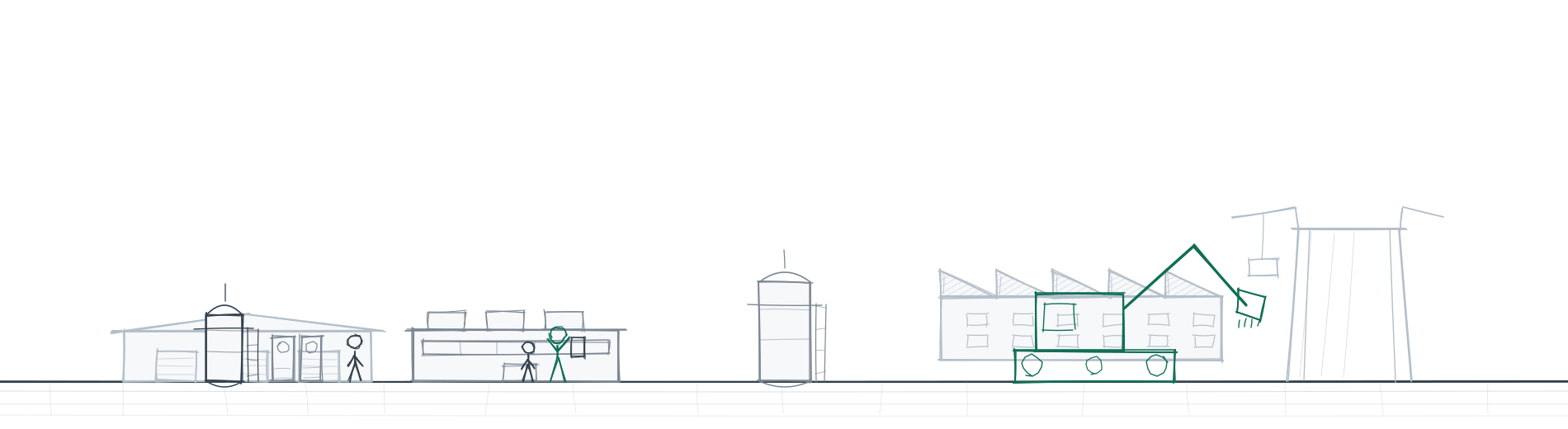
Ranchi is the home of Heavy Engineering Corporation, the plant that has built India’s mining and steel machinery since 1958, and of the engineering ecosystem around it. The work here is engineer-to-order: a rope shovel, a dragline, a gyratory crusher or a coke-oven machine designed for one customer’s specification, cast, forged, machined, assembled and tested on one site. This is not building to a catalogue. An ERPNext implementation in Ranchi is judged on whether it can carry a bill of materials that is created by design rather than looked up, procure the long-lead items that pace the job, and cost each machine as the one-off project it is.
What an ERPNext implementation in Ranchi has to solve
Start with the bill of materials, because here it is born with the order. An engineer-to-order machine does not have a standard BOM waiting on a shelf; the design creates it, and it keeps changing as engineering firms the machine up. The system has to hold a bill of materials that comes from design and evolves, and to flow each revision through to purchasing and the shop floor, because a procurement run against last month’s design buys the wrong steel.
The second is long-lead procurement, because on heavy machinery a single item paces everything. The big castings, forgings, large bearings and drive motors carry lead times measured in months, and they often have to be ordered against a design that is not fully frozen. Planning has to see those long-lead items early and order them ahead, because the whole concept-to-commissioning schedule moves with the one part that arrives last, not the hundred that arrive on time.
The third is that cost accumulates on the project, not against a standard. Each machine gathers its own design hours, its own castings and bought-outs, its own machining and assembly, over a long build, and there is no catalogue cost to compare it to. Margin is known per machine, once every hour and every bought-out has landed on the project, and a system that costs a one-off against a standard is guessing at the only number that matters.
A bill of materials born from design
Engineer-to-order, the BOM created by design rather than pulled from a catalogue, and its revisions flowed through to purchasing and the shop as the machine firms up.
Long-lead procurement, ordered early
The big castings, forgings, bearings and motors that carry months of lead seen early and ordered ahead, because one long-lead item sets the whole concept-to-commissioning schedule.
Cost on the project, not a standard
Each machine’s design hours, castings, bought-outs, machining and assembly accumulated on its own project, so margin is known per machine rather than against a catalogue that does not exist.
One job, concept to commissioning
Casting, forging, fabrication, machining, assembly and testing tracked as a single long project, so a slip in any shop is visible against the whole machine.
How we deliver in Ranchi
We start with the engineer-to-order bill of materials and the long-lead items, because on a one-off machine they are the project. The BOM that comes from design and evolves, its revisions flowing to purchasing, and the long-lead castings and bought-outs identified and ordered early. This looks like configuration and it is the whole job: plan a heavy machine against a frozen catalogue BOM and you will procure the wrong things and promise dates the long-lead items make impossible.
Then the project and the cost: the machine tracked across casting, machining, assembly and test as one job from concept to commissioning, with cost accumulating on the project from design hours to final bought-out. Reporting on schedule against the long-lead items and on margin per machine comes once the BOM and procurement beneath it are captured honestly.
Typical delivery phases for a Ranchi implementation
| Phase | What happens | Why it comes here |
|---|---|---|
| 1. Discovery | Map how design creates and revises the bill of materials, how long-lead items are procured, how cost accumulates, and how the shops are tracked across a build. | Engineer-to-order work is unlike catalogue manufacturing. Assuming a standard BOM would procure the wrong material and misstate the cost of a one-off machine. |
| 2. Engineer-to-order BOM | A bill of materials created from design and evolving, with revisions flowed through to purchasing and the shop floor. | Procurement and production both read from the BOM, so the design-driven, changing structure is built and agreed before anything is ordered. |
| 3. Long-lead and project | Long-lead castings and bought-outs ordered early, and the machine tracked across casting, machining, assembly and test from concept to commissioning. | Needs a trustworthy engineer-to-order BOM underneath before long-lead planning and project tracking mean anything. |
| 4. Cost and margin | Cost accumulated on each project from design hours to final bought-out, and margin reported per machine. | Reporting is only worth trusting once the BOM, procurement and project beneath it are captured honestly. |
We prove the engineer-to-order BOM and the long-lead planning on a live machine before trusting them, because on a one-off a wrong BOM or a missed long-lead item is discovered months in, when the design is committed. In heavy machinery the capture is proven early, because there is no second chance on a casting with a four-month lead.
Are you ready? A short readiness check
- Is your bill of materials created per order from design, or pulled from a catalogue?
- Do you identify and order long-lead items early, against a design that is still firming?
- Does each machine’s cost accumulate on its own project, or against a standard?
- Can you see a project across casting, machining, assembly and test as one job?
- Can you see margin per machine, not just a monthly total?
Four or five clear answers means you mostly need a system that keeps a discipline your engineering already runs. Two or fewer means the first phase is the engineer-to-order BOM and the long-lead items, and on a heavy machine that is the difference between a project you can schedule and one that waits months for a single casting.
Frequently asked questions
Can ERPNext handle an engineer-to-order bill of materials?
Yes. The BOM is created from design rather than pulled from a catalogue, and its revisions flow through to purchasing and the shop floor as the machine firms up, so procurement and production always read the current design rather than a stale one.
How does it handle long-lead procurement?
By identifying the long-lead castings, forgings, bearings and motors early and ordering them ahead, so the concept-to-commissioning schedule is planned around the parts that pace it rather than surprised by them late.
Can it cost a one-off machine?
Yes. Each machine is its own project, accumulating design hours, castings, bought-outs, machining and assembly, so its cost and margin are built from what it actually consumed rather than a standard that does not exist for a bespoke build.
Can it track a machine from concept to commissioning?
Yes. Casting, forging, fabrication, machining, assembly and testing are tracked as one long project, so progress and any slippage are visible against the whole machine, not just a single shop.
How long does an ERPNext implementation take for a Ranchi heavy-engineering business?
Twelve to twenty weeks for an engineer-to-order manufacturer, because the design-driven BOM, long-lead procurement and project costing all have to be modelled and proven. A repeat-build shop is faster; the engineer-to-order depth is the variable, not the software.
Key takeaways for Ranchi businesses
- In Ranchi the machine is engineered to order, so the bill of materials is created by design, not looked up. Hold a BOM that comes from design and evolves.
- Long-lead castings and bought-outs pace the whole project. See them early and order ahead, because the last part sets the date.
- Cost accumulates on the project, not a standard. Each machine’s margin is known once its own hours and bought-outs have landed.
- Track the machine as one job, concept to commissioning, so a slip in any shop shows against the whole.
Planning ERPNext for a Ranchi heavy-engineering business?
Start your ERPNext implementation with a team that will build your engineer-to-order BOM and long-lead procurement before it prints a schedule. KlyONIX Tech™ is a Frappe Certified Partner with offices in Pollachi and Chennai, working with heavy-engineering and manufacturing businesses across Jharkhand and eastern India.
Ranchi is the home of Heavy Engineering Corporation (HEC), a public-sector heavy-machinery complex under the Ministry of Heavy Industries, established in 1958, which designs, casts, forges, machines, assembles and tests capital equipment tailor-made to each customer’s specification, from rope shovels and draglines to crushers and steel-plant machinery. Source checked July 2026.
ERPNext in Kolkata · ERPNext in Raipur · ERPNext in Trichy · ERPNext implementation cost