ERPNext Implementation in Tirupati
ERPNext Implementation in Tirupati
A phone is a few hundred tiny components on a board, and one of them will one day cause a recall. What decides whether that costs you a batch or a fortune is whether you can say exactly which units the bad lot went into.
Investment, capacity and employment figures for the Sri Venkateswara Mobile & Electronics Manufacturing Hub from Andhra Pradesh’s industries department and APIIC, under the Ministry of Electronics & IT Electronics Manufacturing Cluster scheme. Tirupati is the state’s first electronics hub. Source checked July 2026.
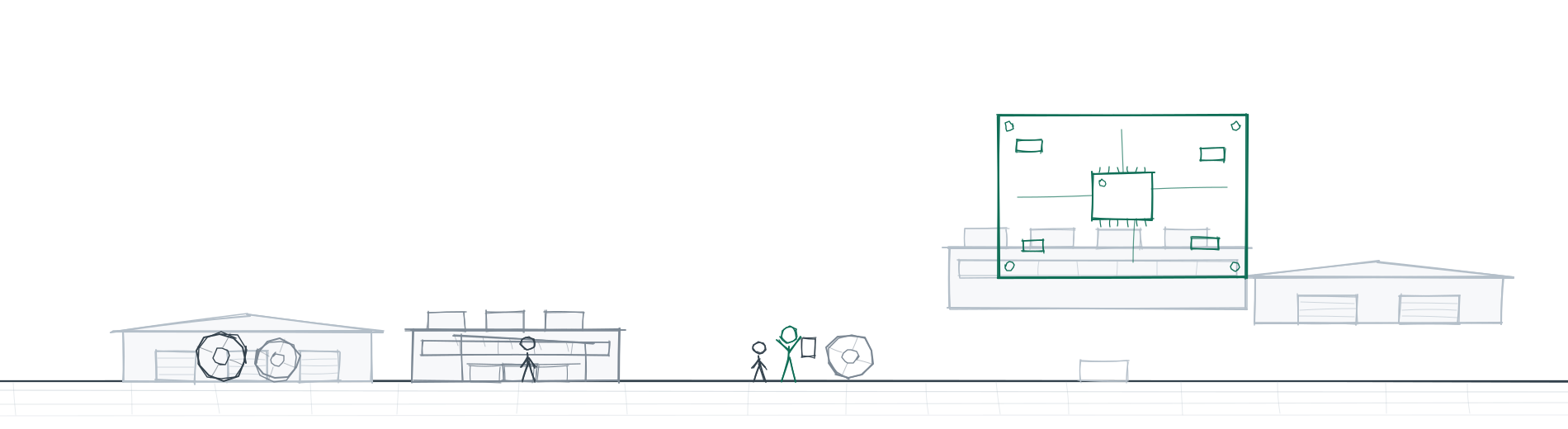
Tirupati has become Andhra Pradesh’s first electronics manufacturing hub, with more than two thousand five hundred crore invested, around twenty-five thousand jobs, and state capacity to build three and a half million phones a month, on the industries department’s figures, with names like Dixon, Wingtech, Foxlink and Sunny placing boards there. Electronics manufacturing is not like other assembly: it runs on hundreds of tiny components with date and lot codes, on serial numbers for every unit, and on the certainty that a bad component lot can be traced. An ERPNext implementation in Tirupati is judged on whether it can hold that traceability, plan components that go obsolete, and build to a customer’s design without deviation.
What an ERPNext implementation in Tirupati has to solve
Start with traceability, because in electronics it is the difference between a contained problem and a catastrophe. Every finished unit carries a serial number, and the components on its board carry date and lot codes. When a capacitor lot turns out bad, the question is not whether you can recall; it is whether you can say precisely which serial numbers received that lot. A system that records the serial and the component lots that went into it turns a recall into a list; one that does not turns it into the whole month’s output.
The second is the component supply chain, because it is long and it goes obsolete. A board is hundreds of parts, many with lead times measured in months, minimum order quantities that dwarf a single build, and a real risk that a chip reaches end-of-life mid-production. Planning has to look far enough ahead to buy long-lead parts, and to flag an obsolete component before it stops a line rather than after. In electronics the part, not the labour, is usually what holds up the build.
The third is that you are building to somebody else’s design. Contract manufacturing means the bill of materials and the approved vendor list belong to the brand, and you build exactly to them; a substitution nobody approved is a quality incident. First-pass yield at test, and the rework loop for units that fail, have to be tracked so yield is a number you improve, and so the cost of a unit carries its components, its yield loss and its rework rather than a hopeful average.
Serial and lot traceability
Every finished unit serialized and the date and lot codes of its components recorded against it, so a bad lot is traced to the exact units it went into rather than the whole month’s output.
Long-lead and obsolescence planning
Hundreds of components planned by lead time and minimum order quantity, with end-of-life parts flagged before they stop a line rather than after, because in electronics the part holds up the build.
Build to the customer’s BOM and AVL
The brand’s bill of materials and approved vendor list built to exactly, with any deviation flagged, so an unapproved substitution never quietly reaches a board.
First-pass yield and rework
Units passing test first time measured, and the rework loop for those that fail tracked, so yield is a number you improve and the cost of a unit carries its yield loss and rework.
How we deliver in Tirupati
We start with traceability and the component master, because everything in electronics rests on them. Serial numbers on finished units, date and lot capture on components, and the customer’s bill of materials and approved vendor list held as the thing you build to. This looks like configuration and it is the project: a line that cannot trace a lot to a serial is one recall away from a very expensive week.
Then the supply chain and the test floor: long-lead and obsolescence planning so parts arrive before the build needs them, first-pass yield and rework tracked at test, and a cost per unit that carries components, yield loss and rework. Reporting on traceability, on component risk and on yield comes once the serial, lot and BOM capture beneath it is solid.
Typical delivery phases for a Tirupati implementation
| Phase | What happens | Why it comes here |
|---|---|---|
| 1. Discovery | Map the SMT and assembly flow, how units are serialized, how component lots are captured, the customer BOM and approved vendor list, and how test and rework work. | Electronics traceability and component control are unlike other assembly. Assuming a generic flow would leave you unable to trace a lot when it matters most. |
| 2. Traceability and BOM | Serial numbers on finished units, date and lot codes on components, and the customer’s bill of materials and approved vendor list held as the build standard. | Recall containment and quality both rest on this, so it is built and agreed before the line is scheduled. |
| 3. Procurement and test | Long-lead and obsolescence planning, and first-pass yield and rework tracked at test. | Needs a trustworthy component master and BOM underneath before lead-time planning and yield mean anything. |
| 4. Cost and margin | Cost per unit carrying components, yield loss and rework, and reporting on traceability, component risk and yield. | Cost and yield reporting are only worth trusting once serial, lot and BOM capture beneath them are solid. |
We prove the serial-to-lot traceability on a live build before trusting it, because the only time you find out your traceability is broken is during a recall, which is the worst possible time. In a plant building to a brand’s standard, the capture is proven before the volume ramps, not after.
Are you ready? A short readiness check
- Does every finished unit carry a serial number, and can you trace the component lots inside it?
- Is your BOM the customer’s approved design with an approved vendor list, and do you build to it?
- Do you plan long-lead components and flag end-of-life parts before they stop a line?
- Do you track first-pass yield at test and the rework on units that fail?
- Does the cost of a unit carry its components, its yield loss and its rework?
Four or five clear answers means you mostly need a system that keeps a discipline your customers already audit you on. Two or fewer means the first phase is traceability and the component master, and in electronics that is the difference between a recall you can contain and one that takes the month with it.
Frequently asked questions
Can ERPNext trace a component lot to the units it went into?
Yes. Finished units carry serial numbers, components carry date and lot codes, and the two are recorded together, so when a lot is found bad you can produce the exact list of serials that received it rather than recalling everything.
How does it handle long-lead and obsolete components?
Components are planned by lead time and minimum order quantity so long-lead parts are ordered far enough ahead, and end-of-life parts are flagged before they stop a line, so procurement sees the risk in time to act.
Can it build to a customer’s bill of materials and approved vendor list?
Yes. The brand’s BOM and approved vendor list are held as the build standard, and any substitution outside the approved list is flagged, so an unapproved part never quietly reaches a board.
Does it track yield and rework at test?
Yes. First-pass yield is measured at test and the rework loop for failed units is tracked, so yield is a number you improve and the cost of a unit carries its yield loss and rework rather than an average.
How long does an ERPNext implementation take for a Tirupati electronics plant?
Twelve to twenty weeks for an EMS plant with serialization and lot traceability, because the traceability, the component master and the customer BOM all have to be modelled and proven. A simple assembly line is faster; the traceability depth is the variable, not the software.
Key takeaways for Tirupati businesses
- In electronics, traceability is the whole game. Serialize every unit and record component lots, or a bad lot means recalling the month, not a batch.
- The component supply chain is long and goes obsolete. Plan lead times and flag end-of-life parts, because the part, not the labour, holds up the build.
- You build to the customer’s BOM and approved vendor list. An unapproved substitution is a quality incident, not a shortcut.
- Track first-pass yield and rework, so yield is a number you improve and the cost of a unit is honest.
Planning ERPNext for a Tirupati electronics or EMS business?
Start your ERPNext implementation with a team that will build serial and lot traceability before it schedules a single board. KlyONIX Tech™ is a Frappe Certified Partner with offices in Pollachi and Chennai, working with manufacturers across Andhra Pradesh and south India.
Investment of more than two thousand five hundred crore rupees, around twenty-five thousand jobs, and Andhra Pradesh’s capacity to build about three and a half million mobile phones a month are from the Andhra Pradesh industries department and APIIC, for the Sri Venkateswara Mobile & Electronics Manufacturing Hub developed under the Ministry of Electronics & IT Electronics Manufacturing Cluster scheme. Source checked July 2026.
ERPNext in Hyderabad · ERPNext in Chennai · ERPNext in Bengaluru · ERPNext implementation cost