ERPNext for Adhesive & Sealant Manufacturing: Bringing Production, Quality and Inventory Together
Industry: Adhesive & Sealant Manufacturing
ERP Platform: ERPNext
ERPNext for Adhesive Manufacturing can help manufacturers connect sales, formulation, purchasing, inventory, production, quality and delivery in one place.
In adhesive and sealant manufacturing, the challenge is rarely just production. A batch may depend on the right formulation, raw material availability, production capacity, quality approval and finished-goods availability. When these activities are managed separately, it becomes difficult to get a clear picture of what is happening.
This is where an integrated Manufacturing ERP can make day-to-day operations easier to track.
ERPNext for Adhesive Manufacturing: Where the Process Starts
For many adhesive manufacturers, the process starts with a customer requirement.
The customer may need an existing adhesive, a different grade, a specific viscosity, a different pack size or a product for a particular application. The sales team first needs to understand and record that requirement.
In ERPNext, the process can move through CRM, Quotation and Sales Order.
Once the order is confirmed, production gets a clearer reference for what needs to be manufactured and in what quantity.
Customer Requirement → Quotation → Sales Order → Production Requirement
This simple connection can reduce the need to maintain separate sales and production lists.
Formulation and BOM Management
Formulation is a key part of ERPNext for Adhesive Manufacturing.
An adhesive may contain resins, polymers, solvents, fillers, additives and other raw materials. The exact combination depends on the product being manufactured.
ERPNext can use an Item and Bill of Materials (BOM) to maintain the manufacturing structure.
The BOM provides production with a defined material reference. Instead of preparing the material list manually for every production run, the production requirement can be linked to the relevant BOM.
The formulation itself remains specific to the manufacturer. ERPNext provides the structure for managing that information as part of the manufacturing process.
For manufacturers looking to improve BOM Management, this also creates a connection between the product sold and the materials required to manufacture it.
New Product Development
Not every customer requirement will be an existing product.
Sometimes a customer may ask for a new bonding application, a different viscosity or a product with specific performance requirements.
In such cases, the requirement may first go through New Product Development (NPD).
A structured NPD process can help the business track:
- New product requirements
- Development activities
- Internal review
- Formulation approval
- Product readiness
Once the formulation is finalized, the product can be created with the required manufacturing structure and moved into the regular production process.
This creates a practical connection between NPD Management and manufacturing.
ERPNext for Adhesive Manufacturing: Production Planning
Once the Sales Order is confirmed, the production team needs to answer a basic question:
When can we manufacture it?
The answer depends on production capacity, existing orders, raw material availability and current finished stock.
ERPNext can bring these details together through its manufacturing and inventory processes.
The Sales Order provides the demand.
The BOM provides the material requirement.
Stock provides visibility into available materials.
Work Orders provide the production requirement.
For more information on ERPNext manufacturing capabilities, manufacturers can refer to the official ERPNext Manufacturing documentation.
This is where Production Planning ERP becomes useful. Production planning does not have to depend entirely on separate spreadsheets, stock registers and manually maintained production schedules.
Raw Material Availability
A production plan is useful only when the required materials are available.
Adhesive and sealant manufacturing can involve several raw materials, and the shortage of even one important material can delay a batch.
ERPNext’s Stock and Buying processes can connect material requirements with procurement and inventory information.
The purchasing team can see what needs to be purchased, while production can check whether the required materials are available.
The ERP does not replace the purchasing team’s decision-making. It simply provides better information for making those decisions.
This makes Inventory Management an important part of an adhesive manufacturing ERP system.
Work Orders and Job Cards
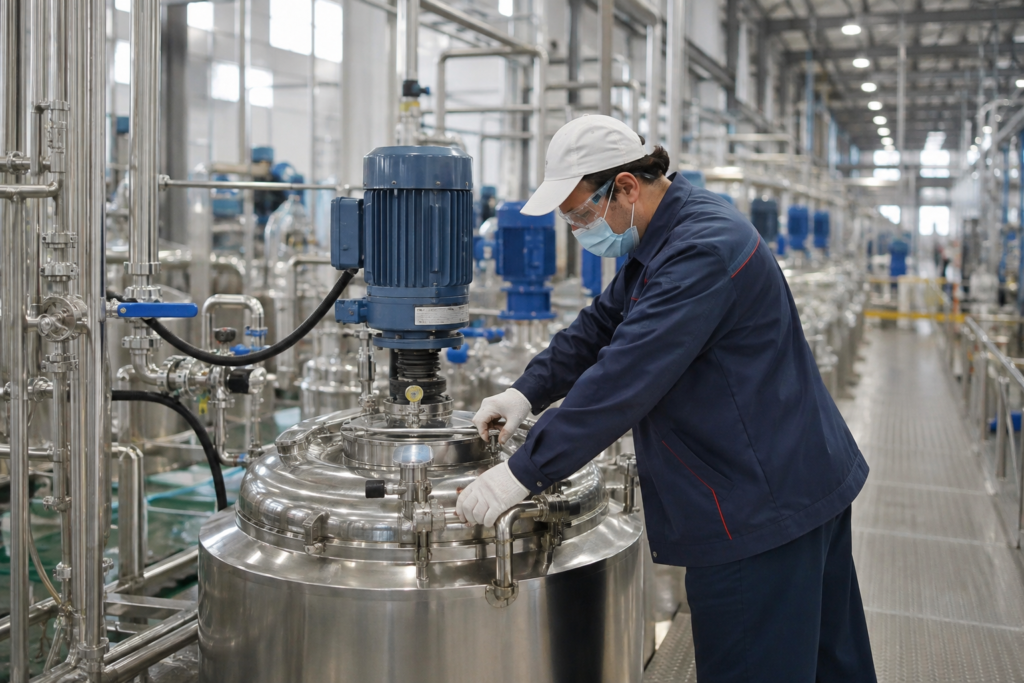
Once production is planned, the Work Order becomes an important manufacturing transaction.
It provides the production team with information such as the product, quantity and BOM required for the production activity.
Where individual operations need to be tracked, Job Cards can be used to record and monitor those activities.
This gives the production team a clearer view of what is planned, what is currently running and what is completed.
Instead of asking different people for updates, management can check the relevant manufacturing transactions.
For a business managing several production orders, this visibility can become especially useful.
Quality Management
Quality is an important part of adhesive and sealant manufacturing.
A batch may be physically completed, but it may not be ready for dispatch until the required quality checks have been completed.
ERPNext’s Quality Inspection functionality can be used to record inspections against the relevant manufacturing transactions.
A typical flow can be:
Production → Quality Inspection → Approved Finished Product
The exact quality parameters will depend on the product and application.
The important point is that quality information can remain connected to the manufacturing process instead of being maintained as a completely separate record.
This can make Quality Management easier to track across production and finished goods.
Batch Tracking and Traceability
Batch information becomes particularly valuable when a quality issue or customer complaint occurs.
The business may need to know:
- Which batch was supplied?
- When was it manufactured?
- What materials were used?
- Was the batch inspected?
- Is any quantity from the same batch still available?
When batch, stock, manufacturing and quality information are connected, the business has a better starting point for investigation.
This is one of the practical benefits of ERPNext for Adhesive Manufacturing: the system can provide a connected transaction history instead of forcing teams to search through multiple registers.
Finished Goods, Delivery and Invoicing
Production does not end when the mixing or processing activity is completed.
Once the product has passed the required quality checks, it can move into finished stock and continue through the sales fulfilment process.
The flow can be:
Finished Goods → Delivery Note → Sales Invoice
This connects the manufacturing activity back to the original customer requirement.
Sales teams can get better visibility into whether an order is:
- Under production
- Waiting for quality
- Available in stock
- Delivered
- Invoiced
That creates a more connected Order-to-Delivery process.
What About Subcontracting?
Some adhesive and sealant manufacturers may outsource certain processing or production activities.
Where subcontracting is part of the business process, ERPNext’s subcontracting functionality can be considered.
Materials, subcontracting transactions and receipts can be tracked within the ERP process rather than being maintained completely separately.
The actual workflow should be based on how the manufacturer handles outsourced activities, material movement and receipts.
Production and Equipment
Production also depends on the equipment used to manufacture the product.
Mixers, processing equipment and other production assets need to be available when required. Preventive maintenance and repair activities also need to be tracked.
ERPNext’s Asset Management capabilities can provide a central place for asset information and maintenance activities.
This can help the business consider equipment availability when planning production.
For example, if a critical mixing machine is scheduled for maintenance, production planning can take that activity into account.
What Management Gets From an Integrated ERP
The value of ERPNext is not simply having separate screens for Sales, Stock, Buying, Manufacturing and Quality.
The bigger advantage is that the information is connected.
Management can get visibility into:
- Sales requirements
- Production progress
- Raw material availability
- Quality status
- Finished stock
- Delivery status
- Asset activities
Reports and dashboards can then be built around the transactions already recorded in the system.
For a growing manufacturer, this can make the difference between simply having data and actually using that data to manage operations.
This is where an Adhesive Manufacturing ERP can provide value beyond basic accounting or inventory management.
ERPNext for Other Formulation-Based Manufacturers
The same approach can be useful beyond adhesive manufacturing.
A detergent manufacturer may have different raw materials but still needs formulation, material planning, production, quality and finished-goods management.
A rubber manufacturer may need to manage compounds, raw materials, production operations and batch information.
A masterbatch manufacturer may work with polymers, pigments and additives while handling several formulations.
The products may be different, but the business questions remain similar:
What needs to be manufactured?
Are the required materials available?
What is currently in production?
Has the batch passed quality?
Where is the finished stock?
What was supplied to the customer?
ERPNext provides the underlying framework, while the implementation can be adapted to the actual process followed by each manufacturer.
ERP for Polymer Manufacturing: A Related Use Case
The same process visibility can be useful in polymer and specialty material manufacturing.
Our related ERP for Polymer Manufacturing case study looks at how ERPNext can connect NPD, production planning, manufacturing, quality, delivery and asset management.
This provides a useful example of how an ERP approach can be adapted to a different manufacturing environment.
ERPNext for Adhesive Manufacturing: Start With the Process
An ERP implementation should not begin with the question:
“Which ERP module should we use?”
A better starting point is:
“How does our business work today, and where are we losing visibility?”
Once the current process is understood, the requirements can be mapped against ERPNext’s standard capabilities.
Some requirements may already be available through standard functionality. Others may require configuration or customization.
The objective should be to customize only where there is a genuine business requirement.
For ERPNext for Adhesive Manufacturing, this process-first approach is particularly useful because formulations, production stages, quality requirements, packaging and subcontracting practices can vary between manufacturers.
Bringing the Manufacturing Cycle Together
A typical adhesive manufacturing flow can therefore look like this:
Customer Requirement → Quotation → Sales Order → Product/Formulation → BOM → Material Planning → Work Order → Job Card → Production → Quality Inspection → Finished Goods → Delivery Note → Sales Invoice
Supporting processes such as Buying, Stock, Quality, Assets and Accounts work alongside the main manufacturing cycle.
Each department continues to perform its own role, but the information does not have to remain isolated within that department.
That is where the value of an integrated Manufacturing ERP becomes visible.
Final Thoughts
Adhesive and sealant manufacturers have their own formulations, production methods, quality requirements and customer expectations.
The ERP system does not need to make every manufacturer follow the same process.
Instead, ERPNext for Adhesive Manufacturing can provide a common foundation that is adapted to the way the business actually works.
The goal is simple: connect customer requirements, formulation, materials, production, quality, finished goods and delivery so that teams can work with better visibility.
The goal isn’t to make every manufacturer work the same way. It’s to make the information they already create work better together.
Related Manufacturing Use Case
For another example of ERPNext being applied to manufacturing, explore our ERP for Polymer Manufacturing case study.
Learn More About ERPNext
For the official ERPNext manufacturing capabilities and documentation, visit ERPNext Manufacturing.
Planning an ERPNext Manufacturing Implementation?
Learn more about KlyONIX ERPNext Implementation services or contact the KlyONIX team.