ERP for Polymer Manufacturing: NPD, Production & Quality
Industry: Discrete Manufacturing | Polymer & Specialty Material Manufacturing
Business Scenario
A polymer and specialty material manufacturer manages products that may be developed based on specific customer requirements. The business process therefore starts with sales enquiries and quotations and can extend into New Product Development (NPD), production planning, manufacturing, quality inspection, delivery, invoicing, and equipment maintenance.
The business needed a more structured way to manage these activities across departments. Sales needed to track customer requirements, the NPD team needed to manage products under development, and the production team needed clear information for planning and execution.
At the same time, quality activities had to be considered as part of manufacturing, while management required better visibility into production and other operational activities.
The use case focuses on how an ERP for polymer manufacturing can bring these activities into a common process and provide better visibility from the initial customer requirement through to finished-product delivery.
Business Challenges
The existing processes had a number of gaps across sales, product development, production, quality, and maintenance.
Sales and Customer Requirements
Customer enquiries and quotations needed better tracking so that requirements could be followed through to the next stage.
New Product Development
New product requirements did not have a dedicated workflow covering initiation, development activities, review, and approval.
Production Planning
BOMs, manufacturing operations, workstations, and production planning needed greater standardization.
Manufacturing Execution
Production progress across Work Orders and Job Cards was not always easy to monitor at a management level.
Quality
Quality inspection needed to be better associated with the manufacturing process so that the status of production and finished products could be understood together.
Asset Maintenance
Information related to assets, preventive maintenance, repairs, and maintenance activities required better central visibility.
Management Reporting
Management required focused views of enquiries, NPD, sales, Work Orders, and assets rather than relying only on individual transactions.
ERP for Polymer Manufacturing: How the Process Works
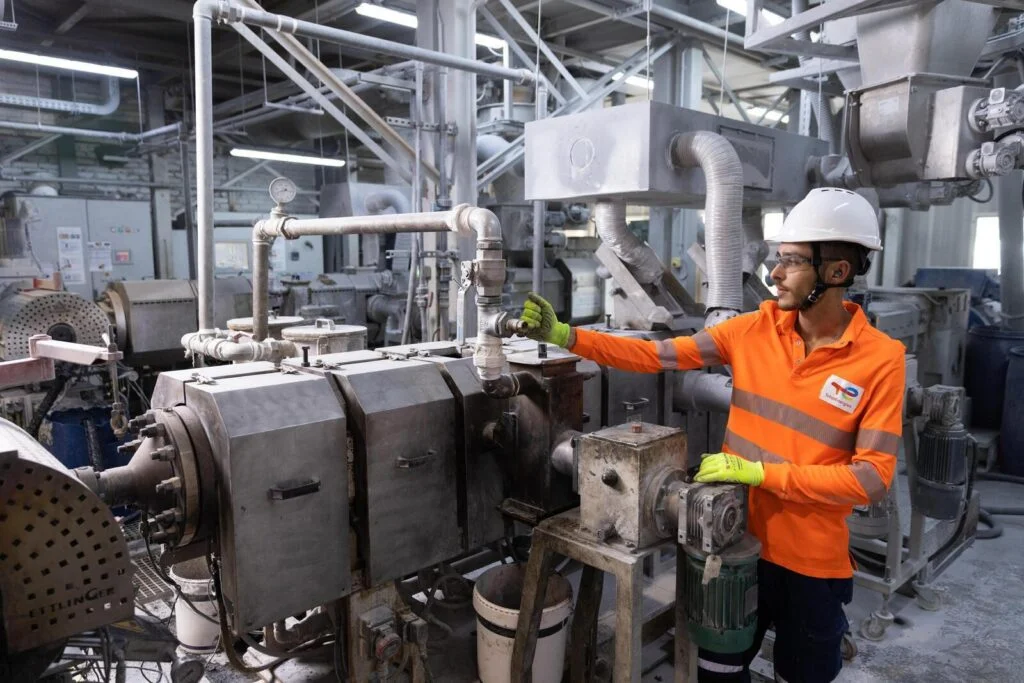
The overall process can be represented as:
Enquiry → Quotation → NPD, where applicable → NPD Review → Sales Order → Production Planning → BOM → Work Order → Job Card → Quality Inspection → Finished Goods → Delivery Note → Sales Invoice
Not every order follows the NPD stage. Existing products can move directly from the sales process into production planning, while new or customized requirements can first go through NPD.
Asset management runs alongside production to manage the equipment used for manufacturing.
This approach gives each department the information required for its activities while maintaining a common view of the overall process.
Sales Enquiry and Quotation
The process begins when a customer approaches the business with a product requirement.
The Sales team can record the enquiry and work through the quotation process before the requirement becomes a confirmed Sales Order.
The process provides visibility into:
- Customer enquiries
- Enquiry status
- Customer requirements
- Quotations
- Follow-up activities
- Sales Order progression
For an existing product, the confirmed requirement can move towards production planning.
For a new or modified product requirement, the process can move into NPD before production begins.
This distinction is important for a manufacturer where not every customer requirement can be fulfilled using an existing product definition.
New Product Development
New Product Development is an important part of the process when the customer requires a new product or a modification that needs development work.
A dedicated NPD workflow can be used to manage these requirements through defined stages.
NPD Process
NPD Initiation → NPD Activities → Review → Approval
Once the required review and approval activities are completed, the product can proceed into the regular sales and manufacturing process.
This gives the business a clearer way to monitor products that are still under development and those that are ready to move into manufacturing.
NPD Management
Effective NPD Management also helps separate development-stage activities from regular production activities.
Management can have visibility into:
- Products under development
- Current NPD stage
- Pending reviews
- Approval status
- Products ready for further processing
For polymer and specialty material manufacturers, this can be particularly useful when customer-specific requirements lead to new product development.
Production Planning and BOM Management
Once a Sales Order is confirmed and the product is ready for manufacturing, the requirement moves into production planning.
The planning process can include:
- BOM creation and maintenance
- Manufacturing operation configuration
- Workstation assignment
- Production planning
- Production stream allocation
- Work Order creation
The BOM provides the manufacturing team with the required product structure, while operations and workstation information define how the product is expected to move through production.
This creates a common reference for production instead of relying on separate planning information for individual orders.
ERPNext provides standard manufacturing capabilities for processes such as BOM management, Work Orders, Job Cards, and production planning. Manufacturing in ERPNext
Production Planning ERP
A Production Planning ERP helps translate confirmed demand into production requirements.
The process can start with the Sales Order and continue through the BOM and manufacturing operations before a Work Order is created.
The main objective is to provide production with the information required to plan and execute the order.
Work Order and Job Card Management
After production planning, manufacturing activities are managed through Work Orders and Job Cards.
The Work Order provides the overall production requirement, while Job Cards can be used to track individual manufacturing operations.
Production teams can use these transactions to monitor activities across different stages of manufacturing.
Management can also review the status of Work Orders to understand:
- Planned production
- Work Orders in progress
- Pending production activities
- Completed Work Orders
- Current manufacturing status
A Work Order Dashboard can bring this information together and provide a more convenient management view.
Subcontracting
Certain manufacturing activities may need to be performed by an external party.
The process therefore needs to accommodate subcontracting where required.
Depending on the manufacturing requirement, an order can involve internal production or external processing.
Including subcontracting within the manufacturing process provides a way to track these activities alongside the organization's regular production requirements.
Quality Management
Quality inspection forms an important part of the manufacturing process.
Rather than treating quality as a completely separate activity, inspections can be associated with the relevant manufacturing process.
The basic flow is:
Production → Quality Inspection → Finished Goods
Quality checks can be carried out before the product proceeds to the next stage.
This provides better visibility into whether a product is awaiting inspection, has passed the required checks, or is ready to move towards delivery.
The benefit is particularly relevant where quality status needs to be considered alongside production status.
Finished Goods, Delivery and Sales Invoice
After production and the required quality activities are completed, the product can move into the finished-goods stage.
The commercial process then continues with:
Finished Goods → Delivery Note → Sales Invoice
This connects the manufacturing process with the final customer transaction.
The Sales team and management can therefore trace the order from the initial enquiry through the manufacturing process and into delivery and invoicing.
Asset Management and Maintenance
Production depends on equipment, machinery, and other operational assets.
Asset management provides a separate but supporting process for maintaining information about these assets.
The process can cover:
- Asset master information
- Asset status
- Preventive maintenance
- Maintenance activities
- Repair history
Preventive maintenance can be planned for assets, while maintenance and repair activities can be recorded against the relevant equipment.
This provides a centralized record of asset-related activities and helps management understand the maintenance status of production equipment.
Management Dashboards
The ERP environment can provide dashboards for important operational areas.
Enquiry Dashboard
Provides visibility into customer enquiries, their status, and progression.
NPD Dashboard
Shows products under development and their current NPD stage or approval status.
Work Order Dashboard
Provides an overview of planned, ongoing, pending, and completed production activities.
Sales Dashboard
Provides management with visibility into sales activities and performance.
Asset Dashboard
Provides visibility into asset status and maintenance-related activities.
These dashboards allow management to review key operational information without depending entirely on individual users or department-level reports.
ERP for Specialty Material Manufacturing
The requirements of specialty material manufacturing can vary depending on the product and customer.
Some requirements may involve standard products, while others may require product development and additional review before manufacturing.
An ERP for Specialty Material Manufacturing can support this variation by providing a common process for sales, NPD, production planning, manufacturing, quality, and delivery.
The same approach can also be applied to other manufacturing environments where product definition, BOMs, production operations, quality checks, and delivery need to be managed together.
ERP for Discrete Manufacturing
Although this use case focuses on polymer and specialty material manufacturing, several of the processes are applicable to wider discrete manufacturing operations.
These include:
- Sales Order-driven production
- BOM management
- Production planning
- Work Orders
- Job Cards
- Manufacturing operations
- Quality inspection
- Subcontracting
- Asset maintenance
- Delivery and invoicing
A Manufacturing ERP can therefore provide a common platform for managing these processes while allowing the actual manufacturing workflow to reflect the organization's business requirements.
Business Value
Better NPD Management
A dedicated NPD workflow gives the business a defined process for managing new product requirements, activities, reviews, and approvals.
More Consistent Production Planning
BOMs, operations, workstations, and production requirements can be managed through a standardized process.
Improved Manufacturing Visibility
Work Orders and Job Cards provide a clearer view of production activities and their current status.
Better Quality Control
Quality inspection becomes part of the manufacturing process rather than being treated as an unrelated activity.
Centralized Asset Information
Asset details, preventive maintenance, repairs, and maintenance activities can be maintained in one system.
Improved Management Visibility
Dashboards provide management with focused information about enquiries, NPD, sales, production, and assets.
Better End-to-End Traceability
The process provides a clearer link between the original customer requirement and the resulting production, quality, delivery, and invoicing activities.
Outcome
The ERP-enabled process provides a structured way to manage the manufacturing lifecycle from customer requirement through to commercial closure.
The core process covers:
Enquiry → Quotation → NPD, where applicable → Sales Order → Production Planning → BOM → Work Order → Job Card → Quality Inspection → Finished Goods → Delivery → Sales Invoice
Alongside this process, asset management supports preventive maintenance, maintenance activities, repairs, and asset tracking.
For management, dashboards provide visibility into enquiries, NPD, sales, Work Orders, and assets.
The key benefit of ERP for polymer manufacturing is the ability to bring these activities into a common operating environment rather than managing each stage independently.
For a polymer or specialty material manufacturer, this provides a practical foundation for managing NPD, production planning, manufacturing, quality, delivery, and asset maintenance with better process visibility.
Related Manufacturing Use Case
The same requirement for better process visibility can be seen in other discrete manufacturing environments.
Explore our Digital Transformation in Precision Machining: 7 Powerful Benefits case study to see how production, inventory, quality, machine-related activities, maintenance, and financial processes can be managed within a precision machining and job-work environment.
Conclusion
For polymer manufacturers, the ERP requirement goes beyond production transactions.
The business needs visibility from the point at which a customer requirement is received through product development, planning, manufacturing, quality, delivery, and invoicing.
An ERP for Polymer Manufacturing provides a structured way to manage this lifecycle while supporting the teams involved in sales, NPD, production, quality, maintenance, and management.
The result is a more consistent manufacturing process with clearer visibility across the activities that take a customer requirement through to a finished product.
Planning a similar ERP transformation?
KlyONIX Tech delivers ERPNext implementations built on genuine domain expertise.
Talk to our team More case studies