ERPNext Implementation in Visakhapatnam
ERPNext Implementation in Visakhapatnam
Bulk cargo is not counted, it is weighed, and the weight on the bill of lading, the draft survey and the weighbridge never quite agree. On a shipment of iron ore, that small disagreement is real money.
Cargo throughput and ranking from the Visakhapatnam Port Authority, a major port under the Ministry of Ports, Shipping & Waterways, for financial year 2024-25. Visakhapatnam is the largest port on India’s east coast. Source checked July 2026.
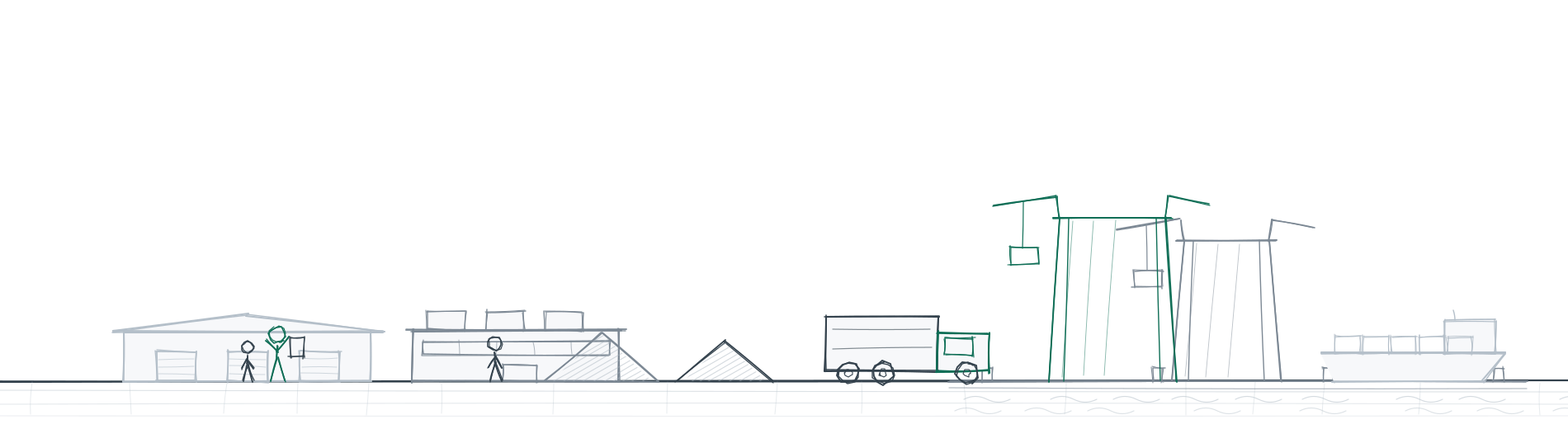
Visakhapatnam runs India’s largest east-coast port, moving eighty-two and a half million tonnes in 2024-25 on the Port Authority’s figures, ranking third among the country’s major ports, with iron ore and coal the bulk of it. A business built around that port, a stevedore, a freight forwarder, a customs house agent, a bulk handler, is not a factory and does not sell a product; it sells the movement of a consignment. An ERPNext implementation in Visakhapatnam is judged on whether it can cost a vessel call, hold a quantity that is weighed rather than counted, and stop demurrage from quietly eating the margin on a shipment.
What an ERPNext implementation in Visakhapatnam has to solve
Start with quantity, because bulk is weighed and the weights disagree. A consignment of ore or coal arrives as a figure on the bill of lading, a different figure from the draft survey, and a third from the weighbridge, and the difference is not a rounding error; on a large parcel it is a claim or a loss. The system has to hold quantity as a measured thing with its variance, and reconcile the three, rather than pretend a bulk cargo has a single tidy number.
The second is the job, and the job is the vessel call. A single consignment gathers stevedoring, wharfage, port dues, transport, handling and more, from several parties, and the only honest question is whether that shipment made money. If those charges scatter across a monthly ledger, margin per shipment is unknowable. Gathering every charge against the consignment, and billing the principal against the same job the sub-contractors are paid against, is the whole discipline.
The third is demurrage, because it is where profit disappears. Waiting charges accrue when a vessel or a container sits longer than allowed, and they run both ways: what you owe, and what you can recover from a principal who caused the delay. Demurrage that surfaces on an invoice weeks later has already turned a good shipment into a bad one. The system has to make the clock visible while it is running, not after it has stopped.
Quantity that is weighed, not counted
Bulk held in tonnes by weighbridge and draft survey, with the variance against the bill of lading reconciled, because on a large parcel the difference between the three figures is real money.
The vessel call is the cost object
Stevedoring, wharfage, port dues, transport and every charge gathered against one consignment, so margin is known per shipment rather than lost in a monthly total.
Demurrage tracked both ways
Waiting charges you owe and those you can recover made visible while the clock runs, because demurrage found weeks later has already turned a profitable shipment into a loss.
Bill the principal, pay the network
One job billed to the client with its markup while labour gangs, transporters and the port are paid against it, so every party reconciles to the same shipment.
How we deliver in Visakhapatnam
We start with the consignment as the cost object and quantity as a measured thing, because a port business is organised around the shipment, not a warehouse of SKUs. The vessel call or consignment that gathers every charge, and bulk quantity by weighbridge and draft survey with its variance reconciled. This looks like configuration and it is the project: cost a shipment on a guessed tonnage and the margin is fiction before you start.
Then the charges and the billing: demurrage tracked both ways while the clock runs, the principal billed with markup against the same job the labour, transport and port are paid against, and margin reported per shipment and per client. Reporting on demurrage exposure and shipment profitability comes once the job and the quantity beneath it are captured honestly.
Typical delivery phases for a Visakhapatnam implementation
| Phase | What happens | Why it comes here |
|---|---|---|
| 1. Discovery | Map how bulk quantities are captured and reconciled, how a vessel call or consignment gathers its charges, how demurrage is handled, and how principals and sub-contractors are billed and paid. | Every port operator structures a job differently. Assuming a product-style flow would leave a shipment’s real cost and margin invisible. |
| 2. Job and quantity | The vessel call or consignment as the cost object, and bulk quantity by weighbridge and draft survey with the variance against the bill of lading reconciled. | The whole costing rests on the job and a measured quantity, so they are built and agreed before charges are loaded. |
| 3. Charges and billing | Every charge gathered to the job, demurrage tracked both owed and recoverable, and the principal billed against the same job the network is paid against. | Needs a trustworthy job and quantity underneath before charges and billing mean anything. |
| 4. Cost and margin | Margin per shipment and per client, demurrage exposure, and reporting drawn from the job rather than a monthly ledger. | Reporting is only worth trusting once the consignment and the quantity beneath it are captured honestly. |
We prove the quantity reconciliation and the demurrage clock on live shipments before trusting them, because a port business finds out its margin was wrong only when a claim lands. In a trade where a vessel day and a tonne of variance are both large numbers, the capture is proven before it is relied on.
Are you ready? A short readiness check
- Are bulk quantities captured by weighbridge or draft survey, and is the variance against the bill of lading reconciled?
- Is a vessel call or consignment your cost object, gathering all of its charges?
- Do you track demurrage and detention, both what you owe and what you can recover?
- Do you bill the principal and pay the labour, transport and port against the same job?
- Can you see margin per shipment, not just a monthly total?
Four or five clear answers means you mostly need a system that keeps a discipline your operations already run. Two or fewer means the first phase is the consignment and the quantity, and at a port that is the difference between knowing a shipment made money and finding out when the claim arrives.
Frequently asked questions
Can ERPNext handle bulk quantities measured by weight?
Yes. Quantity is held in tonnes from the weighbridge and draft survey, with the variance against the bill of lading reconciled, so a bulk cargo is treated as the measured, slightly uncertain thing it is rather than a single tidy count.
Can it cost a vessel call or consignment as one job?
Yes. A consignment is the cost object, and stevedoring, wharfage, port dues, transport and every other charge are gathered against it, so you can see whether that shipment made money instead of losing the charges in a monthly ledger.
How does it handle demurrage and detention?
As charges tracked both ways against the job, what you owe and what you can recover from the principal, made visible while the clock runs, so demurrage is managed rather than discovered on an invoice weeks later.
Can it bill a principal while paying sub-contractors on the same job?
Yes. The principal is billed with the agreed markup against the consignment, and labour gangs, transporters and the port are paid against that same job, so every party reconciles to one shipment and the margin is real.
How long does an ERPNext implementation take for a Visakhapatnam port business?
Eight to sixteen weeks for a forwarder or handler, because it is a service and job-costing configuration rather than a factory. The variable is how many charge types and parties a job carries, not the software.
Key takeaways for Visakhapatnam businesses
- At the port, bulk is weighed, not counted, and the bill of lading, draft survey and weighbridge disagree. Hold quantity with its variance or a claim becomes a loss.
- The vessel call is the job. Gather every charge against the consignment or margin per shipment is unknowable.
- Demurrage runs both ways and runs quietly. Make the clock visible while it ticks, not weeks later on an invoice.
- One shipment, many parties. Bill the principal and pay the network against the same job so everything reconciles.
Planning ERPNext for a Visakhapatnam port, logistics or trading business?
Start your ERPNext implementation with a team that will cost a vessel call and reconcile a tonne before it prints a margin. KlyONIX Tech™ is a Frappe Certified Partner with offices in Pollachi and Chennai, working with logistics and manufacturing businesses across Andhra Pradesh and the east coast.
The cargo throughput of 82.62 million tonnes for financial year 2024-25 and Visakhapatnam’s rank among India’s major ports are from the Visakhapatnam Port Authority, a major port under the Ministry of Ports, Shipping & Waterways. Iron ore and coal make up the largest share of the bulk handled. Visakhapatnam is the largest port on India’s east coast. Source checked July 2026.
ERPNext in Hyderabad · ERPNext in Tirupati · ERPNext in Chennai · ERPNext implementation cost