ERPNext Implementation in Dehradun
A Selaqui unit runs on registers and a spreadsheet, and it works until a buyer asks for a batch record, an expiry trail or a barcode it cannot produce. The first ERP here is not a big-pharma system; it is the smallest one that makes those answers real.
Selaqui, near Dehradun in Uttarakhand, hosts the Pharma City developed by SIIDCUL, the state industrial corporation, and the pharma cluster at Selaqui, Haridwar and Roorkee is largely MSME formulation units. Source checked July 2026.
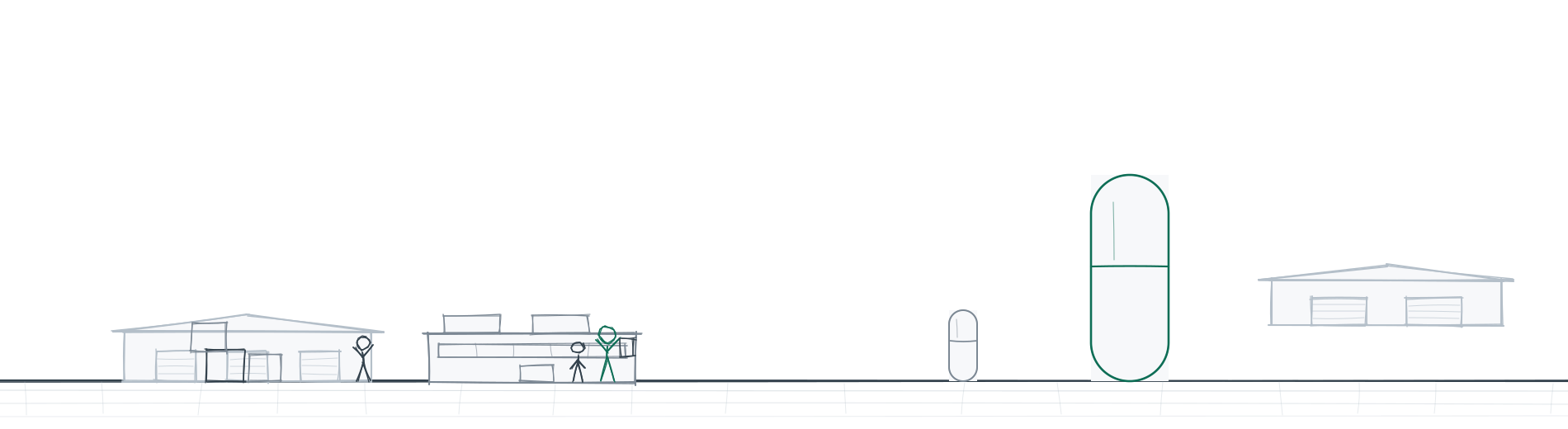
Selaqui, near Dehradun, and the wider Uttarakhand cluster at Haridwar and Roorkee, is built on small and mid-size formulation units rather than big-pharma plants. Many run today on registers and a spreadsheet, and that holds until a larger buyer, an export order or an auditor asks for a batch record, an expiry trail or a barcode the unit cannot produce by hand. An ERPNext implementation in Dehradun is judged not on how much it can do, but on whether it gives a small unit its first trustworthy batch record, expiry traceability and serialization, at a size the unit can actually run.
What an ERPNext implementation in Dehradun has to solve
Start with the batch record, because it is the thing a small unit is suddenly asked for. Today the run is written in a register and the stock is in a spreadsheet, and it works until a buyer or an auditor wants the batch manufacturing record behind a shipment. The system has to give the unit a batch record per run, scoped to what it actually makes, because the answer a buyer now expects cannot be reconstructed from a notebook after the fact.
The second is expiry and traceability, done simply. A formulation unit lives on batch numbers and expiry dates, and it has to despatch oldest-first and trace a batch if there is a query, but a small unit cannot carry a heavy system to do it. The system has to make batch, expiry and oldest-first despatch routine without overhead, because a capability the unit does by hand today has to become something it does without thinking tomorrow.
The third is serialization, because it is how a small unit sells up. Larger buyers and export orders ask for barcoding and serialization, and a unit that cannot produce it is shut out of that business. The system has to serialize and barcode at despatch without an army of staff, because for a Selaqui unit serialization is not a compliance chore, it is the door to a bigger customer.
A first trustworthy batch record
A batch manufacturing record per run, scoped to what the unit actually makes, so a buyer or auditor gets the record behind a shipment rather than a reconstruction from a register.
Expiry and traceability, made routine
Batch numbers, expiry dates and oldest-first despatch made routine without heavy overhead, so a capability done by hand today becomes automatic tomorrow.
Serialization that opens doors
Barcoding and serialization at despatch without extra staff, because for a small unit it is the entry ticket to larger buyers and export orders.
Sized for a small unit to run
A system scoped to what an MSME can actually operate and afford, live on the core first, so it is used every day rather than bought and abandoned.
How we deliver in Dehradun
We start small and on the core, because for an MSME the wrong first move is a big-pharma system nobody can run. The batch record, stock and expiry live first, scoped to what the unit makes, then serialization once the core is trusted. This looks modest and it is the whole point: a lean system that is used every day beats a complete one that sits unused because it was too heavy for a small team.
Then the capabilities that sell up: barcoding and serialization at despatch, and traceability a buyer or auditor will accept. Reporting and any later growth come once the batch record and expiry beneath them are captured honestly, because a small unit earns its next customer on a record it can actually produce, not on a system it cannot run.
Typical delivery phases for a Dehradun implementation
| Phase | What happens | Why it comes here |
|---|---|---|
| 1. Discovery | Map what the unit makes, how runs and stock are recorded today, and what a buyer, an export order or an auditor is actually asking the unit to produce. | A small unit is unlike a big-pharma plant. Scoping to what it really makes and needs avoids a system too heavy to run. |
| 2. Core live | A batch manufacturing record per run, stock, and expiry with oldest-first despatch, scoped to the unit’s real products. | The batch record and expiry are the foundation and the first thing buyers ask for, so they go live before anything else. |
| 3. Serialization | Barcoding and serialization at despatch, added once the core batch and stock are trusted. | Needs a trustworthy core underneath, and is what opens larger buyers and export once the basics are solid. |
| 4. Reporting and growth | Simple reporting on batches, expiry and stock, and room to grow as the unit does. | Reporting and growth are only worth adding once the batch record and expiry beneath them are captured as the work is done. |
We keep the first phase small and prove it on live production before adding anything, because for an MSME the risk is not too little system but too much. In Dehradun the core is proven first, because a small unit keeps a lean system it can run and quietly abandons a heavy one it cannot.
Are you ready? A short readiness check
- Are your runs and stock in registers and a spreadsheet, or in a system?
- Can you produce a batch manufacturing record for a shipment when a buyer or auditor asks?
- Are batch numbers, expiry and oldest-first despatch routine, or done by hand?
- Can you barcode and serialize at despatch for a larger buyer or an export order?
- Would a system scoped to what your unit actually makes be one your team could run every day?
Four or five clear answers means you may only need to tidy and formalise what you already do. Two or fewer means the first step is a small, core system, the batch record and expiry, scoped to your products, and for a Selaqui unit that first real system is often the difference between winning a bigger buyer and being shut out of one.
Frequently asked questions
Is ERPNext too big for a small Selaqui unit?
Not when it is scoped correctly. The implementation is kept to the batch record, stock and expiry a small unit actually needs, live on the core first, so it is a lean system the team runs every day rather than a big-pharma platform nobody can operate.
Can it give us a batch record a buyer will accept?
Yes. Each run holds a batch manufacturing record scoped to what the unit makes, so a buyer, an export order or an auditor gets the record behind a shipment rather than a reconstruction from a register.
Does it handle expiry and oldest-first despatch simply?
Yes. Batch numbers, expiry dates and oldest-first despatch are made routine without heavy overhead, so a small team does automatically what it does by hand today.
Can it do the serialization larger buyers ask for?
Yes. Barcoding and serialization at despatch are added once the core is trusted, so a small unit can meet a larger buyer’s or an export order’s requirement without staffing up.
How long does a first ERPNext implementation take for a Dehradun unit?
Six to twelve weeks for a small formulation unit, because the first phase is deliberately scoped to the batch record, stock and expiry. Serialization and reporting follow once the core is proven; the restraint is the point, not the software.
Key takeaways for Dehradun businesses
- In Dehradun the unit is small and often on registers, so the first ERP is the smallest one that makes a batch record, expiry trail and barcode real, not a big-pharma system.
- Batch numbers, expiry and oldest-first despatch have to become routine without heavy overhead a small team cannot carry.
- Serialization is the door to larger buyers and export, so barcoding at despatch matters even for a small unit.
- Go live on the core first and prove it, because a lean system that is used beats a complete one that is abandoned.
Planning your first ERPNext for a Dehradun formulation unit?
Start your ERPNext implementation with a team that will scope it to what your unit actually makes and get the core live before adding anything. KlyONIX Tech™ is a Frappe Certified Partner with offices in Pollachi and Chennai, working with MSME pharmaceutical and manufacturing units across Uttarakhand and North India.
Selaqui, near Dehradun in Uttarakhand, hosts the Pharma City developed by SIIDCUL, the state industrial infrastructure and development corporation, and the pharma cluster at Selaqui, Haridwar and Roorkee is largely small and mid-size formulation units. Source checked July 2026.
ERPNext in Baddi · ERPNext in Sikkim · ERPNext in Delhi NCR · ERPNext implementation cost