Pharma Serialization & Track-and-Trace ERP
Serialization is not a label printer. A unique code goes on the pack, the carton, the case and the pallet, each linked parent to child, and every one of those codes has to reconcile to real stock and a real despatch, or you have built a second set of books that quietly drifts from the first.
The Ministry of Health and Family Welfare requires a barcode or QR on the top 300 drug brands under the Drugs Rules, 1945, effective 1 August 2023, and export customers add their own serialization requirements; India’s separate DGFT export track-and-trace rule was withdrawn on 31 January 2025. Source checked July 2026.
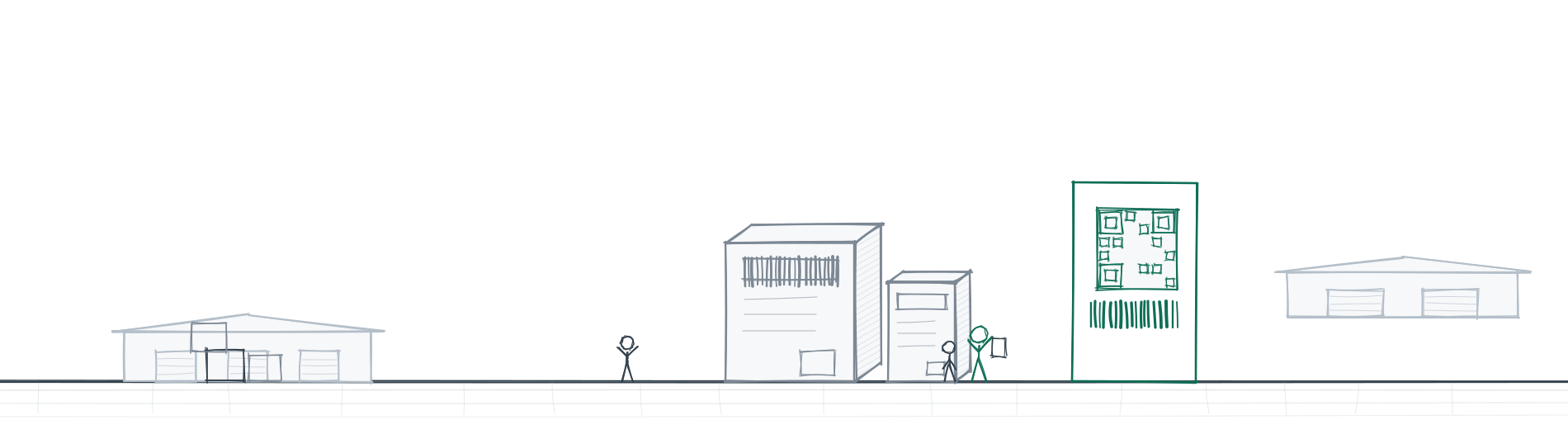
Pharmaceutical serialization means putting a unique, verifiable code on medicine and being able to say where each coded unit is. In India the Ministry of Health and Family Welfare now mandates a barcode or QR on the top drug brands, and every export market a plant sells into has its own serialization and aggregation rules. The hard part is not printing a code; it is that the code has to live with the batch, roll up from unit to case to pallet, reconcile to real stock and despatch, and stay true through rework, damage and returns. A serialization and track-and-trace layer built into ERPNext keeps all of that in one system, rather than in a bolt-on that becomes a second source of truth.
What pharma serialization actually has to solve
Start with the levels, because a serial is not one thing. A unique code goes on the primary pack, the secondary carton, the tertiary shipper case and the pallet, and each level has to link parent to child: this carton holds these strips, this case holds these cartons. The system has to generate, hold and aggregate serials across those levels, because a serial that is not aggregated is a number that cannot answer the question a customer or a regulator actually asks, which is what is inside this case.
The second is reconciliation, because a serial is only worth anything if it matches reality. Every serial has a status, commissioned, packed, shipped, decommissioned, and it has to tie back to the batch it belongs to and the stock and despatch it moves with. The system has to keep serial status reconciled to actual stock, because a serialization tool that runs beside the ERP rather than inside it becomes a parallel ledger, and the day the two disagree is the day an audit or a customer portal rejects the file.
The third is exceptions, because the line is not perfect. Packs are damaged, cartons are reworked, cases are split, goods are returned, and each event changes the status and the aggregation of the serials involved. The system has to handle decommissioning, re-aggregation and returns cleanly, because serialization that only works when nothing goes wrong is serialization that fails on the first real shift.
Serials across every level
Unique codes on unit, carton, case and pallet, generated and held in the system and aggregated parent to child, so the answer to what is inside this case comes from the record.
Reconciled to real stock
Every serial carries a status and ties to its batch, stock and despatch, so serialization lives inside the ERP rather than in a parallel ledger that drifts.
Exceptions handled cleanly
Decommissioning, rework, case splitting and returns update serial status and aggregation, so the record stays true when the line does not run perfectly.
Ready for the portal and the customer
Serialized and aggregated data produced in the shape a mandate portal or an export customer expects, from the same records the plant actually ran.
How we deliver serialization on ERPNext
We start with the levels and reconciliation, because on serialization they are the whole design. Serials generated and aggregated across unit, carton, case and pallet, each with a status tied to its batch, stock and despatch. This looks like configuration and it is the point: run serialization as a bolt-on beside the ERP and you will keep two sets of numbers that agree until the day they matter, when a portal file or a customer scan finds the gap.
Then exceptions and reporting: decommissioning, rework, case splitting and returns that keep serial status honest, and serialized and aggregated data produced in the shape each mandate or customer expects. The reporting is only worth trusting once the serials, aggregation and reconciliation beneath it are captured as the line runs, not stitched together afterwards.
The levels of serialized packaging
| Level | What carries a serial | What it rolls up to |
|---|---|---|
| Primary | The unit pack: a strip, blister, bottle or vial carries its own unique code. | Rolls up into the secondary carton it is packed in. |
| Secondary | The carton, coded and linked to the exact primary packs inside it. | Rolls up into the tertiary shipper case. |
| Tertiary | The shipper case or corrugated box, coded and linked to its cartons. | Rolls up onto the pallet, and is what most export uploads report at. |
| Aggregation | The parent-child links across all levels, kept in one place. | Answers what is inside any case or pallet, and survives rework and returns. |
We prove the levels and reconciliation on a live run before adding reporting, because a serial that does not tie to stock is discovered at a customer scan or an audit, when it is most expensive to unpick. In serialization the aggregation is proven early, because a case that cannot say what is inside it is a case that gets rejected at the door.
Bolt-on or built-in? A short decision guide
A bolt-on serialization tool, printing and storing codes beside your ERP, can be quick to stand up and may be all a very small exporter needs for one market. Its cost is a second source of truth: serial status and stock live in different systems, and reconciling them is manual work that grows with volume and breaks under exceptions.
A built-in layer, where serials live with the batch, stock and despatch in ERPNext, costs more to model up front but removes the reconciliation problem entirely, because there is only one ledger. If you serialize for more than one market, aggregate to case and pallet, or handle meaningful returns and rework, built-in is almost always the cheaper answer over any real horizon.
Are you ready? A short readiness check
- Do you serialize at unit, carton, case and pallet, or only where one customer forces you to?
- Are your serials aggregated parent to child, so you can say what is inside a case?
- Does every serial carry a status that ties back to its batch, stock and despatch?
- Does your serialization run inside your ERP, or beside it as a separate ledger?
- Can you decommission, re-aggregate and take back serials cleanly when the line does not run perfectly?
Four or five clear answers means you mostly need to formalise a discipline you already run. Two or fewer means the first work is the levels and reconciliation, and on serialization that is the difference between a file a customer portal accepts and one it silently rejects.
Frequently asked questions
Is serialization still mandatory for Indian pharma exports?
The specific DGFT export track-and-trace rule was withdrawn on 31 January 2025, but serialization has not gone away: the Ministry of Health and Family Welfare mandates barcode or QR on top drug brands under the Drugs Rules, 1945, and every regulated export market, from the United States to the European Union, requires its own serialization and aggregation. In practice a serious exporter serializes.
What is aggregation, and why does it matter?
Aggregation is the parent-child link between levels: which primary packs are in a carton, which cartons are in a case, which cases are on a pallet. It matters because customers and portals ask what is inside a case without opening it, and only aggregated serials can answer from the record.
Can ERPNext do serialization natively, or do we need a separate system?
Serialization can be built into ERPNext so serials live with the batch, stock and despatch in one system. A separate tool is possible and sometimes appropriate for a very small single-market exporter, but for anything with multiple markets, aggregation or returns it creates a parallel ledger that has to be reconciled by hand.
How does it handle rework, damage and returns?
Each event updates serial status and aggregation: a damaged pack is decommissioned, a reworked carton is re-aggregated, a returned case is brought back against its serials. Handling these cleanly is what separates serialization that works on a real shift from serialization that only works in a demo.
How long does a serialization implementation take?
Typically eight to sixteen weeks depending on the levels and markets involved, because the serial model, aggregation and reconciliation all have to be built and proven on a live line. A single-level, single-market rollout is faster; aggregation and multi-market reporting are the variables, not the software.
Key takeaways
- Serialization is levels, not a label: unit, carton, case and pallet, each coded and linked parent to child.
- A serial is only worth its reconciliation. Keep serial status tied to batch, stock and despatch inside one system, not a bolt-on ledger.
- Exceptions are the real test. Decommissioning, rework and returns have to keep the serial record true when the line does not run perfectly.
- The India export track-and-trace rule was withdrawn in 2025, but the Health Ministry mandate and every export market keep serialization firmly in play.
Planning serialization or track-and-trace on ERPNext?
Start with a team that will build your serial levels, aggregation and reconciliation into ERPNext rather than bolt a second ledger beside it. KlyONIX Tech™ is a Frappe Certified Partner working with pharmaceutical manufacturers and exporters across India.
The Ministry of Health and Family Welfare and CDSCO mandate barcode or QR on the top 300 drug brands under the Drugs Rules, 1945, effective 1 August 2023; the DGFT track-and-trace system for pharmaceutical exports was withdrawn on 31 January 2025, with serialization now driven by the Health Ministry framework and by export destination requirements such as the United States DSCSA and the European Union FMD. Source checked July 2026.
ERPNext for Pharmaceutical · ERPNext in Sikkim · ERPNext in Dehradun · ERPNext in Vadodara